
Thirteen Deputies, One Oath
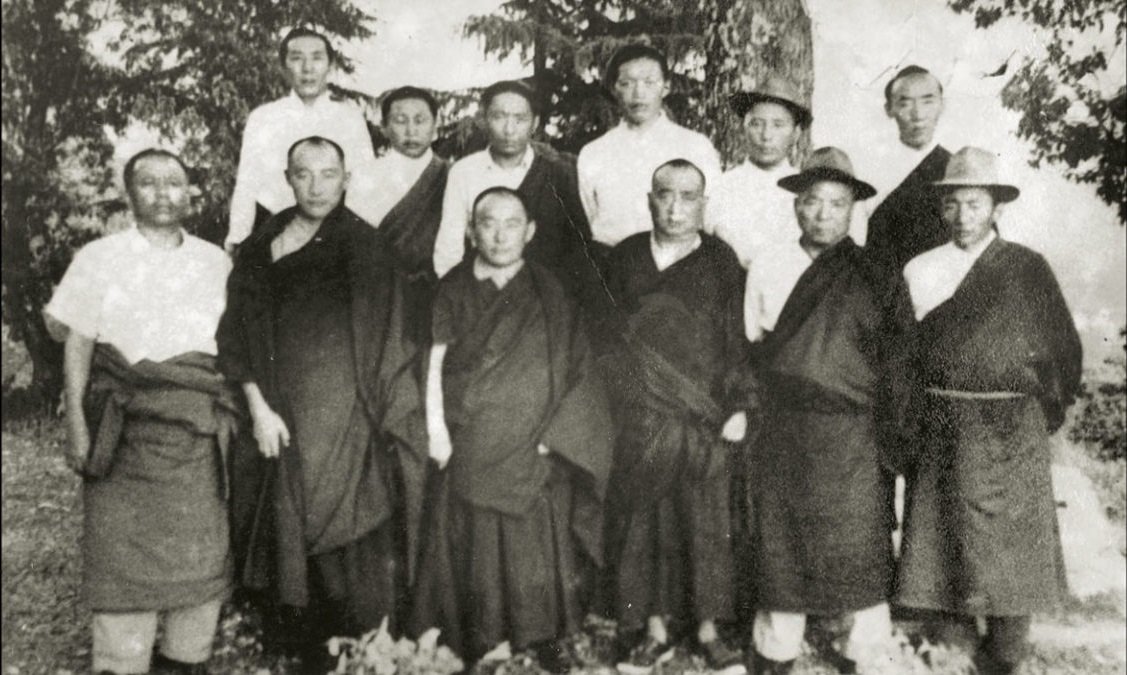
On 2 September 1960, thirteen Tibetans stood before the Dalai Lama in Dharamsala and took an oath of office. Eighteen months earlier, they and tens of thousands of others had fled across the Himalayas after the uprising in Lhasa. Most refugees were still living in road construction camps and transit centres in northern India. The exile administration had only moved to Dharamsala that May.
And yet, on that day, they did something no generation of Tibetans had done before: they took office as representatives elected by the Tibetan people.
Sixty-six years later, that first assembly has become a full democratic system: a 45-member parliament, a directly elected head of government, an independent judiciary, and elections held in Tibetan communities across more than 25 countries, including Switzerland. This is how it was built, how it works today, and why Tibetans continue to mark 2 September as Democracy Day.
A democracy without a state, for 66 years.
1959 to 1960: The beginning
The 14th Dalai Lama had begun political reforms in Tibet before 1959, including a reform office established in 1954 and a public grievances department in 1956. These efforts were blocked under Chinese occupation.
After the March 1959 uprising in Lhasa and his escape to India, the Dalai Lama re-established the Tibetan government in exile on 29 April 1959 in Mussoorie. In May 1960 the administration moved to Dharamsala, where it remains today.
On 3 February 1960, at Bodh Gaya, the site of the Buddha’s enlightenment, representatives of Tibet’s three traditional provinces and its religious traditions gathered before the Dalai Lama. They took a written oath, known as the Great Oath, pledging unity and loyalty to the Tibetan cause. The Dalai Lama used the occasion to set out a plan for a democratic system: an elected body with three representatives from each of the three provinces, U-Tsang, Kham and Amdo, and one representative from each of the four schools of Tibetan Buddhism.
Elections were held, and on 2 September 1960 the thirteen elected deputies took their oath of office before the Dalai Lama as the Commission of Tibetan People’s Deputies. In 1975 the Kashag declared 2 September as Tibetan Democracy Day, in Tibetan Mangtso Duchen, and it has been observed annually since then.
1963 to 2011: Building the institutions
1963: The first constitution. On 10 March 1963 the Dalai Lama promulgated a draft Constitution for a future Tibet based on democratic principles. Following this, the first women were elected to the assembly.
1980: Assembly of Tibetan People’s Deputies. On 18 January 1980 the body was renamed the Assembly of Tibetan People’s Deputies. In 1990 the Dalai Lama announced further democratisation, enlarging the assembly and giving it the power to elect the Kashag, the cabinet, which became answerable to the elected representatives.
1991: The Charter of Tibetans in Exile. The 11th Assembly adopted the Charter on 14 June 1991 and the Dalai Lama approved it on 28 June 1991. The Charter established the three pillars of the Central Tibetan Administration: the Parliament as legislature, the Kashag as executive, and the Tibetan Supreme Justice Commission as judiciary (formally instituted in 1992). It also gave Parliament the power to impeach the Kashag, the Justice Commissioners and the heads of the independent commissions by a two-thirds majority, and even the Dalai Lama under special circumstances by a three-quarters majority.
2001: Direct election of the Kalon Tripa. Before 2001, the Dalai Lama proposed three names for each ministerial post and the assembly selected one; the Kalon Tripa was then chosen from among the ministers. On the Dalai Lama’s advice the Charter was amended so that the Kalon Tripa, the head of the executive, would be elected directly by Tibetans worldwide. Professor Samdhong Rinpoche won the first direct election in 2001 with around 80 percent of the vote. The Dalai Lama described himself as semi-retired from political affairs from this point.
2006: Tibetan Parliament-in-Exile. The assembly adopted its current name.
2011: Devolution of political authority. In March 2011 the Dalai Lama announced that he would transfer all his political authority to the elected leadership. On 14 March 2011 the Charter was amended accordingly, and provisions relating to his political role and to regents were repealed. On 25 May 2011 he declined a request from the Tibetan National General Meeting to remain even as ceremonial head, agreeing only to be recognised in the Charter’s preamble as the protector and symbol of the Tibetan people. On 8 August 2011 he formally handed political leadership to the newly elected Kalon Tripa, Dr Lobsang Sangay. This ended the political role of the Gaden Phodrang, the institution of the Dalai Lamas, which had held both spiritual and temporal authority since the 17th century. On 20 September 2012 Parliament changed the title Kalon Tripa to Sikyong, meaning political leader.
The Central Tibetan Administration today
The CTA is based in Dharamsala, Himachal Pradesh, and has three branches.
The Tibetan Parliament-in-Exile has 45 members:
- 10 members each from U-Tsang, Kham (Dhotoe) and Amdo (Domey), with at least two women in each provincial group
- 2 members each from the Nyingma, Kagyu, Sakya and Gelug schools of Tibetan Buddhism and from the Bon tradition
- 2 members elected by Tibetans in North and South America
- 2 members elected by Tibetans in Europe and Africa
- 1 member elected by Tibetans in Australasia and Asia outside India, Nepal and Bhutan
Tibetans in Switzerland vote for the two Europe seats. Any Tibetan aged 25 or over may stand for Parliament. The Parliament elects its own Speaker and Deputy Speaker and elects the three Justice Commissioners.
The Kashag is the executive, led by the Sikyong, who nominates up to seven Kalons (ministers) subject to parliamentary approval. The departments are Religion and Culture, Home, Finance, Education, Security, Information and International Relations, and Health.
The Tibetan Supreme Justice Commission is the judiciary, established under the provisions of India’s Arbitration Act, and handles civil matters within the exile community.
No state formally recognises the CTA as a government. India hosts the Dalai Lama and allows the CTA to operate but does not grant it official recognition. Tibetans in exile, and according to the CTA also Tibetans inside Tibet, regard it as their legitimate representative.
Elections: how Tibetans in exile vote
Elections for the Sikyong and Parliament are held every five years in two rounds: a preliminary round to shortlist candidates and a final round to elect them. Voters must be at least 18, registered with the Election Commission, and up to date with their Green Book contributions, the voluntary annual payment to the CTA.
The most recent election took place in 2026.
- Registration and campaign. The Central Election Commission announced the schedule on 7 October 2025 under the slogan “I am Tibet, I vote for Tibet”. The 17th Parliament ended its term early so that the Sikyong and parliamentary elections could be held together.
- Preliminary round, 1 February 2026. 51,140 Tibetans voted in 27 countries. 103 candidates received votes for Sikyong. Incumbent Sikyong Penpa Tsering received 61.025 percent. Under Article 67(4) of the Election Rules, a candidate who secures more than 60 percent in the preliminary round is declared elected without a final round, and on 13 February 2026 the Commission declared him elected Sikyong of the 17th Kashag. He is the sixth directly elected head of the executive since 2001.
- Final round, 26 April 2026. Tibetans voted for the 45 members of the 18th Parliament. Results were announced on 13 May 2026. Voter turnout in the final round was 45.71 percent.
- New Parliament and cabinet. The 18th Parliament held its first session on 2 and 3 June 2026 under Speaker Dolma Tsering Teykhang and approved all six Kalons nominated by the Sikyong. The new leadership serves until 2031.
The Asian Network for Free Elections (ANFREL) sent an international observation mission to the 2026 elections. It found the process peaceful, orderly and credible in the areas observed, and recommended reforms to strengthen institutional capacity, transparency and participation.
Why Democracy Day matters to Tibetans
It was chosen, not inherited. Tibetan democracy did not come from a revolution or an outside power. It was introduced by the Dalai Lama and accepted, sometimes reluctantly, by Tibetans who would have preferred him to keep his authority. Each major step, from 1960 to 1991 to 2001 to 2011, reduced his own power and increased that of elected representatives.
It connects a dispersed people. Tibetans live in India, Nepal, Bhutan, Switzerland, the United States, Canada, France, Belgium, Australia and many other countries. The CTA, the Green Book and the elections give them a shared institution regardless of where they live.
It is designed to outlast any single leader. The Dalai Lama turned 91 in July 2026. The 2011 devolution was made explicitly so that the Tibetan political system would not depend on him.
It is held on behalf of Tibetans in Tibet. The roughly six million Tibetans inside Tibet cannot elect their own representatives. The CTA regards the exile elections as an exercise of the political rights of all Tibetans.
It is a preparation for the future. The CTA describes its democratic system as preparation for the governance of Tibet when Tibetans are able to determine their own future.
Tibetan democracy continues to face challenges: declining turnout in 2026, ongoing debates about electoral rules and representation, and the limits of operating without state recognition. These are discussed openly within the community and in Parliament, which is itself a sign of a functioning democratic system.
On 2 September, Tibetans around the world mark 66 years since those thirteen deputies took their oath. Many of today’s voters were born in exile and have never seen Tibet. They vote anyway, in Zürich, Toronto, Dharamsala, Kathmandu and Sydney, for a government without a state and a homeland they have not lost the right to decide about.
Mangtso Duchen la tashi delek.
Cover photo: the first Commission of Tibetan People’s Deputies, 1960. Source: Tibetan Parliament-in-Exile, via Wikimedia Commons (public domain).
Sources
- Statement of the Kashag on the 65th Tibetan Democracy Day (Office of Tibet)
- Statement of the Tibetan Parliament-in-Exile on the 60th Tibetan Democracy Day
- Statement of the Tibetan Parliament-in-Exile on the 64th Tibetan Democracy Day
- Evolution of the Tibetan Parliament-in-Exile
- About the Central Tibetan Administration
- Legislature of the CTA
- Executive of the CTA
- Charter of the Tibetans in Exile (Central Election Commission)
- Kalon Tripa becomes Sikyong (CTA, 2012)
- Election schedule for 2025 to 2026 (CTA)
- Preliminary election results, February 2026 (CTA)
- Preliminary election held in 27 countries (Tibet Post International)
- Final election results, May 2026 (Phayul)
- First session of the 18th Parliament approves the 17th Kashag (CTA)
- International Campaign for Tibet on the 2026 elections
- ANFREL observation report on the 2026 elections