A Morning on the Mountain
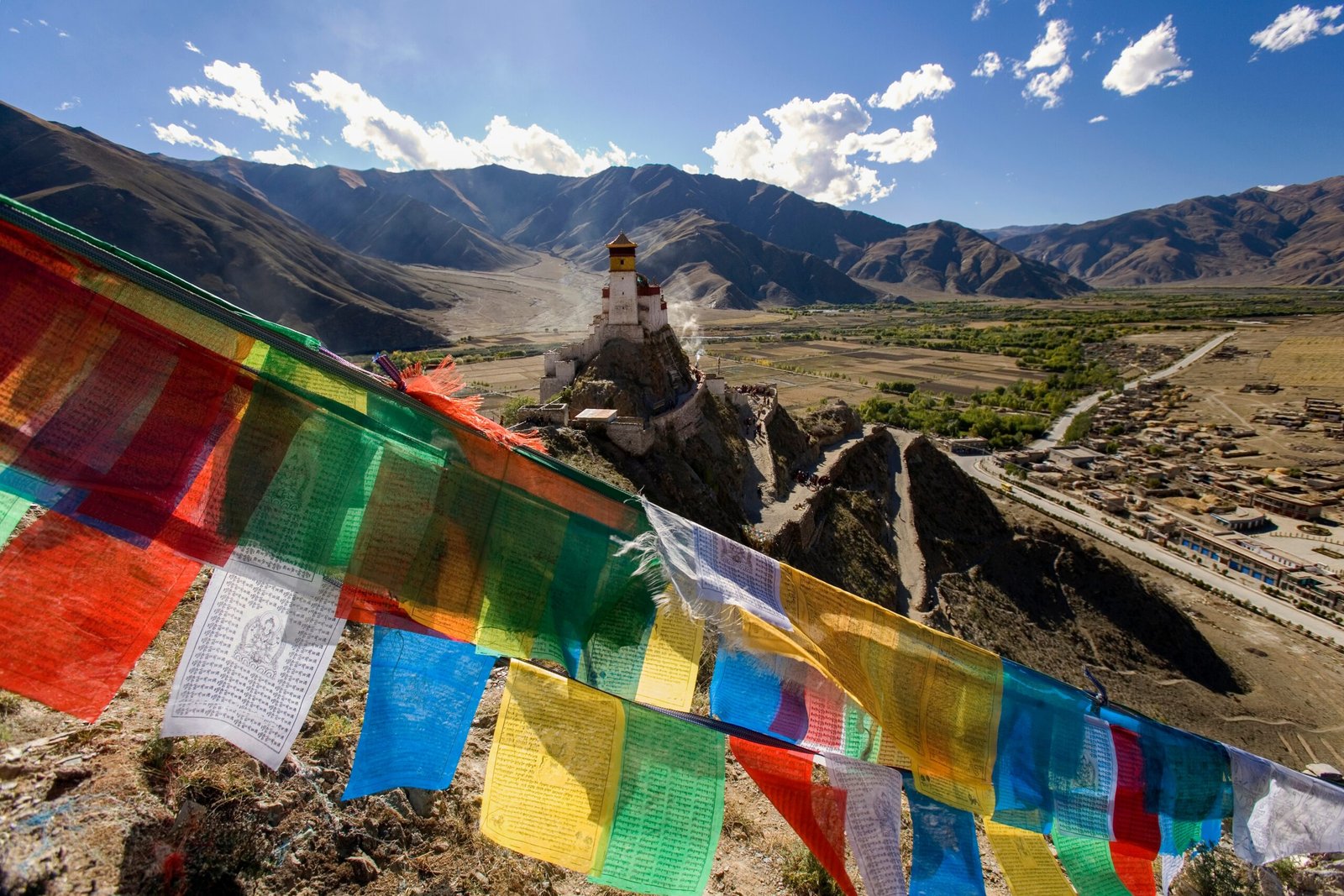
Imagine standing on a high mountain pass in the Himalayas just after sunrise. The air is thin and so cold that every breath feels sharp. Around you, hundreds of small colored flags are tied to long ropes between rocks and wooden poles. The wind picks up. The flags begin to snap and dance blue, white, red, green, yellow against a sky that feels close enough to touch. Somewhere below, a man whispers, “Lha Gyalo.” Victory to the gods. These are Tibetan prayer flags sacred symbols carried on the mountain wind.
This is not a decoration. This is not a tourist photo. This is a prayer.
Where the Tradition Comes From
Tibetan prayer flags are among the most recognized symbols of Tibetan culture in the world. You see them in Dharamsala and Kathmandu, in the mountains of Ladakh, and now in cafés in Paris and yoga studios in New York. But most people do not really know what they are, or why Tibetans have been hanging them for more than a thousand years. Let’s walk through it together the simple way.
Long before Buddhism reached Tibet, the people of the high plateau followed an older religion called Bön. The Bön shamans used plain colored cloth to honor the spirits of mountains, lakes and rivers. The colors stood for the elements of nature sky, wind, fire, water, earth and the flags were a way of saying thank you to the land.
Then, in the 8th century, a great Indian master named Padmasambhava whom Tibetans lovingly call Guru Rinpoche, the Precious Guru came to Tibet. He taught the Buddha’s path and many of the prayers that are still printed on flags today. About three hundred years later, another Indian master, Atisha, brought the Indian custom of printing sacred words onto cloth banners. Two streams one old and one new joined together and became what we now call Tibetan prayer flags.
Tibetans also tell a quieter, older story. A monk was once carrying sacred scriptures back from India. Crossing a river, the pages got wet. He laid them out on a tree branch and on the grass to dry, and sat down to meditate. Suddenly a strong wind came and scattered the pages everywhere into the valleys, over the mountains, across the sky. When the monk opened his eyes, he understood. The wind had done something holy. It had carried the prayers to every direction at once.
From that day, the story goes, Tibetans began printing prayers onto cloth and letting the wind do the rest.
“The flags do not carry prayers to gods. The prayers are blown by the wind to spread goodwill and compassion into all space.”
— Tibetan Nuns Project
Two Kinds of Prayer Flags
There are two main types of Tibetan prayer flags, and once you know the difference, you will spot them everywhere.
Lungta — the Wind Horse
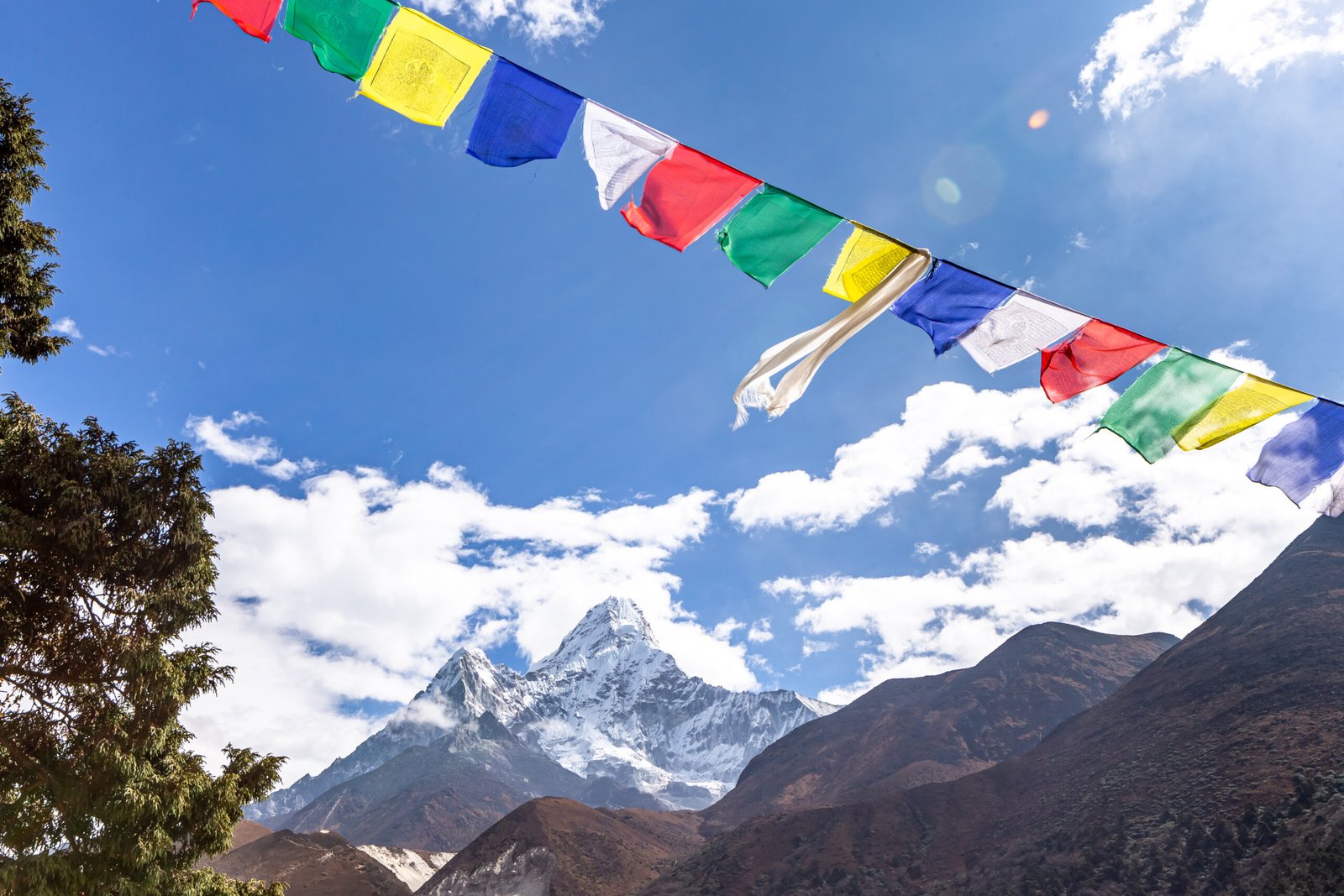
Lungta means “Wind Horse.” These are the small square or rectangular flags strung together on a rope, hung between rooftops, trees, mountain peaks, or poles. This is the kind you see crossing valleys like colorful bridges.
Darchog — the Flagstaff
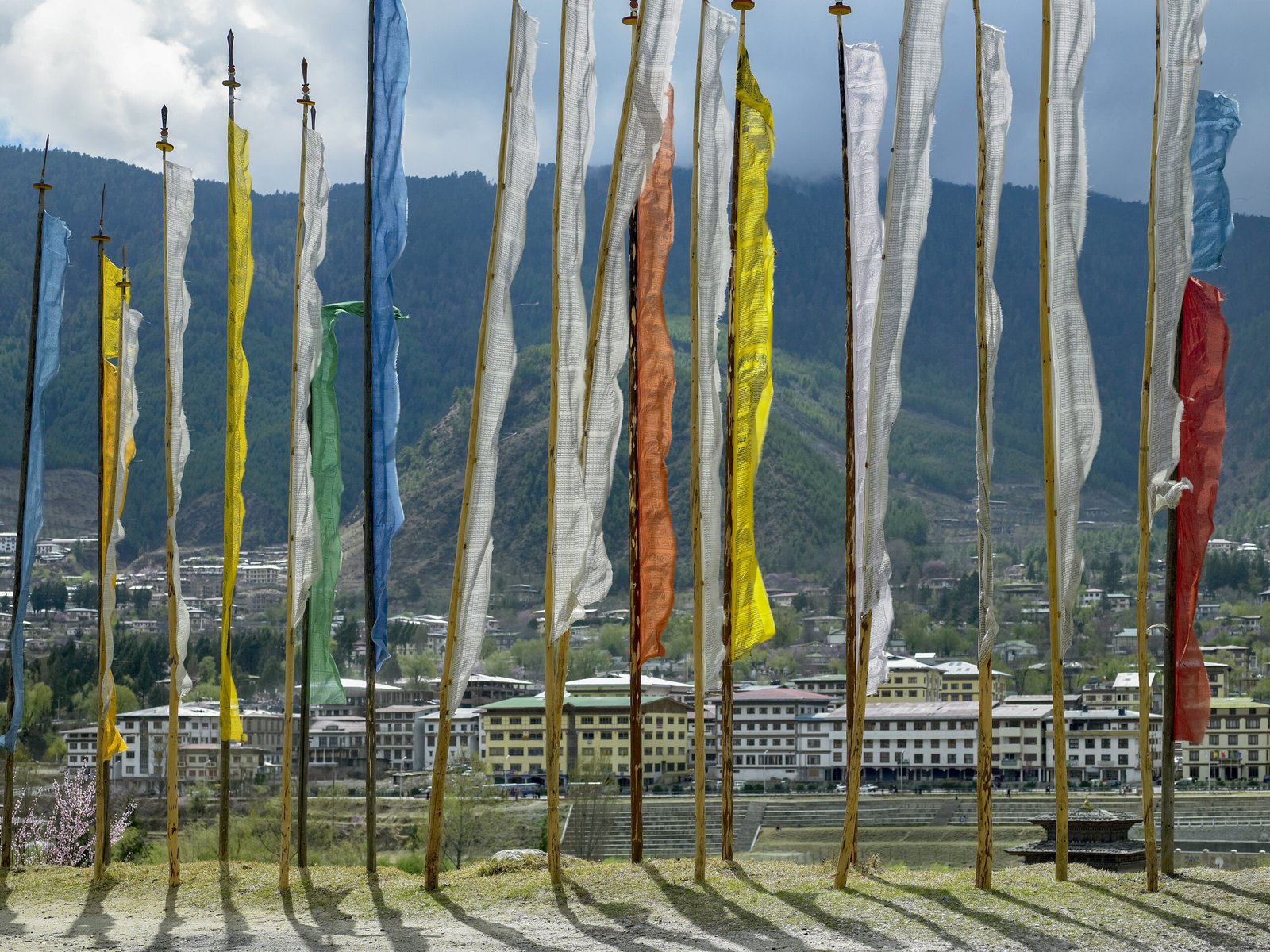
Darchog means “flagstaff.” These are the tall vertical flags attached to long wooden poles, often planted in the ground at monasteries, near stupas, or on rooftops. They look like a single bright ribbon pointing straight up to the sky.
Both have the same job: to carry blessings on the wind.
The Five Colors, and What They Mean
The five colors are never random. They always appear in the same order, and the order is sacred. Reading from one end to the other: blue, white, red, green, yellow. If you ever see prayer flags in a different order, they have been hung incorrectly.
Each color stands for one of the five elements of nature, and for one of the Five Wisdom Buddhas in Tibetan Buddhism.
- Blue is sky and space. It stands for the wisdom that sees everything clearly, like a mirror.
- White is air, wind, and clouds. It stands for the wisdom of reality, the kind that cuts through confusion.
- Red is fire. It stands for the wisdom of discernment the warm, bright awareness that knows what is.
- Green is water. It stands for the wisdom of action, the energy that gets things done.
- Yellow is earth. It stands for the wisdom of equality, the steady, grounded mind that treats everyone the same.
Tibetan medicine teaches that health and happiness come when the five elements are in balance inside us. The flags are a quiet reminder of that balance, fluttering above our heads.
The Wind Horse, the Jewels, and the Four Dignities
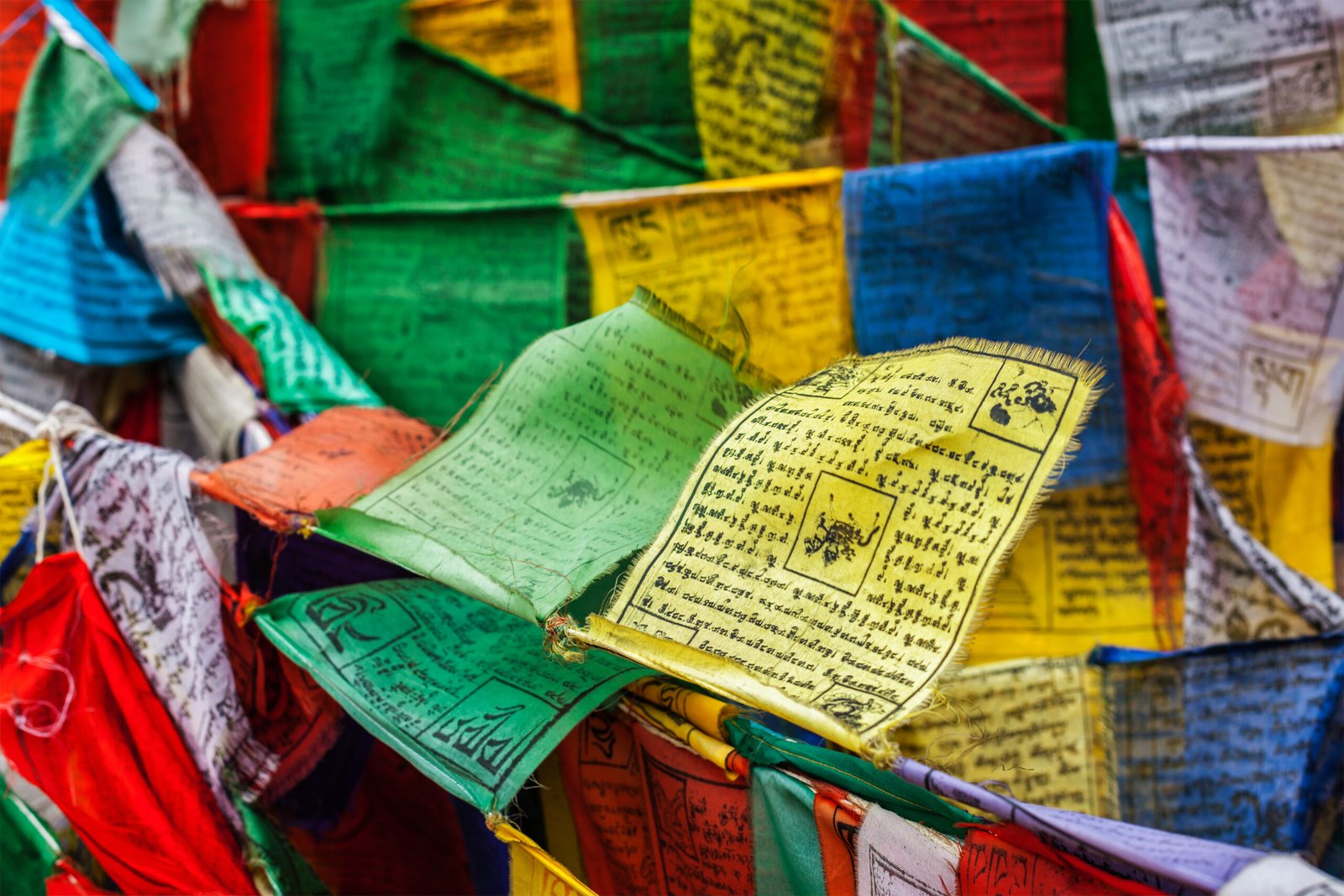
Look closely at a prayer flag and you will see far more than color. In the center, on most flags, gallops a horse. This is the Lungta, the Wind Horse, carrying three flaming jewels on its back.
The three jewels are the Buddha, the Dharma (his teachings), and the Sangha (the community of practitioners). Tibetans call them Konchog Sum, the Triple Gem. The Wind Horse is fast and tireless, and his job is to carry these jewels and our prayers to every corner of the world.
In the four corners of the flag, four powerful animals stand guard. Tibetans call them the Four Dignities.
- The Garuda, a mythical bird of the sky, stands for wisdom and fearlessness the ability to see clearly from above.
- The Dragon, the spirit of water and thunder, stands for power and gentle strength.
- The Snow Lion, the heart of Tibet itself and the animal on the Tibetan national flag, stands for joy and fearless cheerfulness.
- The Tiger stands for confidence, discipline, and quiet courage.
Around the Wind Horse and the animals, mantras are printed in beautiful Tibetan script. The most common is Om Mani Padme Hum, the six-syllable mantra of Chenrezig, the Buddha of compassion. The Dalai Lama is considered an emanation of Chenrezig, which is why this mantra is so dear to every Tibetan.
Why Tibetans Hang Tibetan Prayer Flags
Here is the most important thing to understand.
Prayer flags are not asking gods for favors. Tibetans are not praying for personal gifts when they hang them. The flags are a gift to the world.
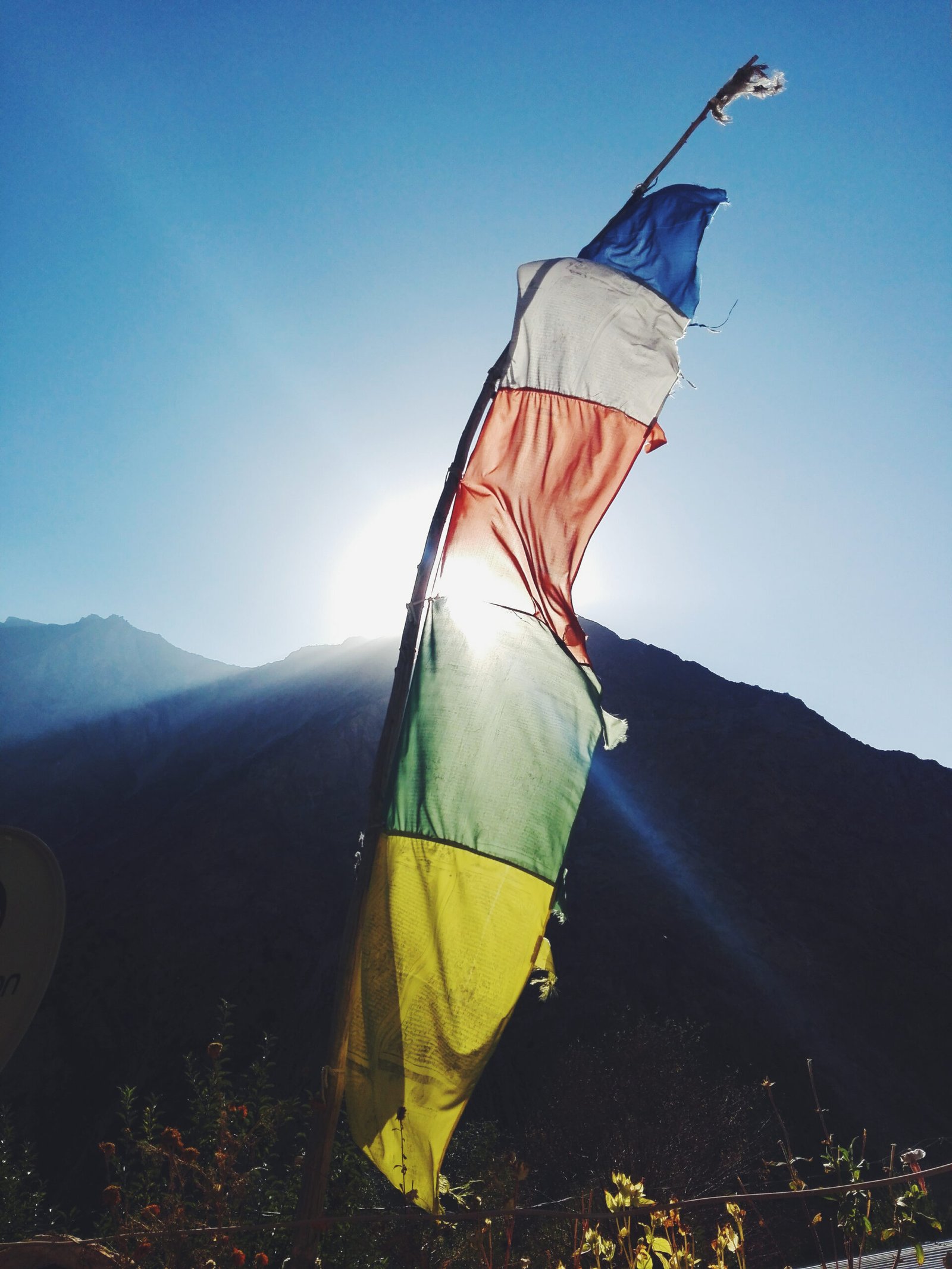
Every time the wind blows through a flag, the mantras and prayers printed on it are released into the air. They spread compassion, peace, and good fortune to every being the wind touches humans, animals, even the spirits of the land. The Tibetan word for them is Dar Cho. Dar means “to increase life and good fortune,” and Cho means “for all beings.”
There is one more layer, and it is the most beautiful. Over months and years, the sun fades the colors. The wind tears the cloth. The flags grow soft and pale. Tibetans do not see this as damage. They see it as the prayer doing its work, slowly dissolving into the world. The fading is the prayer being given away. This is also a quiet teaching about impermanence — the truth that everything in life changes, and that change is not always sad.
When and How to Hang Them
In Tibetan tradition, prayer flags are hung on auspicious days. The most powerful are the four great Buddhist holidays called Düchen, when the karmic results of any good action are multiplied: Chötrül Düchen (the Day of Miracles), Saga Dawa Düchen (the Buddha’s birth, enlightenment, and parinirvana), Chökhor Düchen (the First Teaching), and Lhabab Düchen (the Buddha’s Descent from Heaven). Losar, Tibetan New Year, is also a common day especially the third morning, when families climb to their rooftops at sunrise to put up fresh flags.
There are also a handful of unlucky days in the Tibetan calendar called Baden days, when hanging new flags is believed to bring obstacles. A good Tibetan calendar or a lama can tell you which days to avoid.
A few simple rules of respect:
- Hang them high on a rooftop, a tree, between mountain peaks. Never on the ground.
- Keep the color order intact: blue, white, red, green, yellow.
- Choose a sunny, windy morning. Mondays are traditionally favored.
- When old flags fade and fray, do not throw them in the trash. Burn them respectfully the smoke carries the last of the blessings to the sky.
- Hang new flags next to the old ones. The contrast between bright and faded is itself a teaching.
More Than a Pretty Decoration
Because prayer flags have become popular around the world, you can find them in many shops. Some people hang them as “boho” decor on balconies, in bedrooms, even on cars. There is nothing wrong with appreciating their beauty. But it is good to remember what they really are. Each flag carries sacred writing. Each color carries a teaching. Tibetan tradition asks for one simple thing: respect.
Never let them touch the ground. Do not step on them or sit on them. Do not write on them. If you want to hang them, the most meaningful flags are those blessed by Tibetan lamas, or made by Tibetan nuns and monks in the diaspora — because your purchase also supports the people whose tradition this is.
A Prayer That Travels on the Wind
For Tibetans, prayer flags carry one more meaning today. In 1959, after the Chinese occupation of Tibet, His Holiness the 14th Dalai Lama and around 80,000 Tibetans escaped over the Himalayas into exile. Today there are more than 130,000 Tibetans living outside Tibet in India, Nepal, Switzerland, the United States, Canada, Australia, and many other countries.
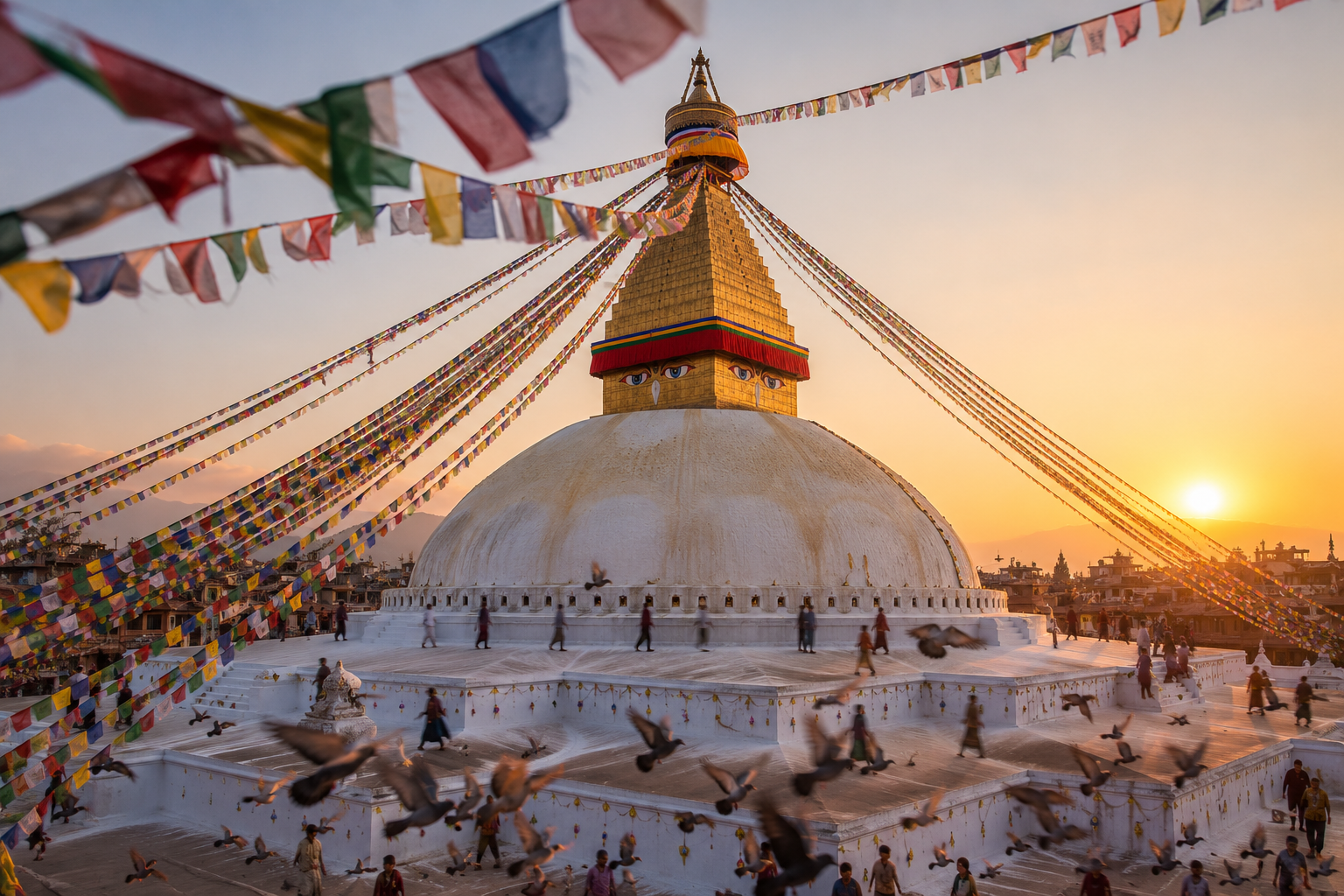
Wherever Tibetans live, prayer flags follow. They flutter over the Tsuglagkhang temple in Dharamsala. They drape the great stupa of Boudhanath in Kathmandu. On March 10, Tibetan National Uprising Day, communities from McLeod Ganj to New York hoist fresh flags as a prayer for the long life of His Holiness the Dalai Lama, for the freedom of Tibetans inside Tibet, and for the day when the journey home is possible. Find Tibetan cultural events near you, or discover more about Tibetan culture worldwide.