


Tibetan events in India
Five upcoming Tibetan events in three towns, from Dharamsala to New Delhi, organised by four communities.
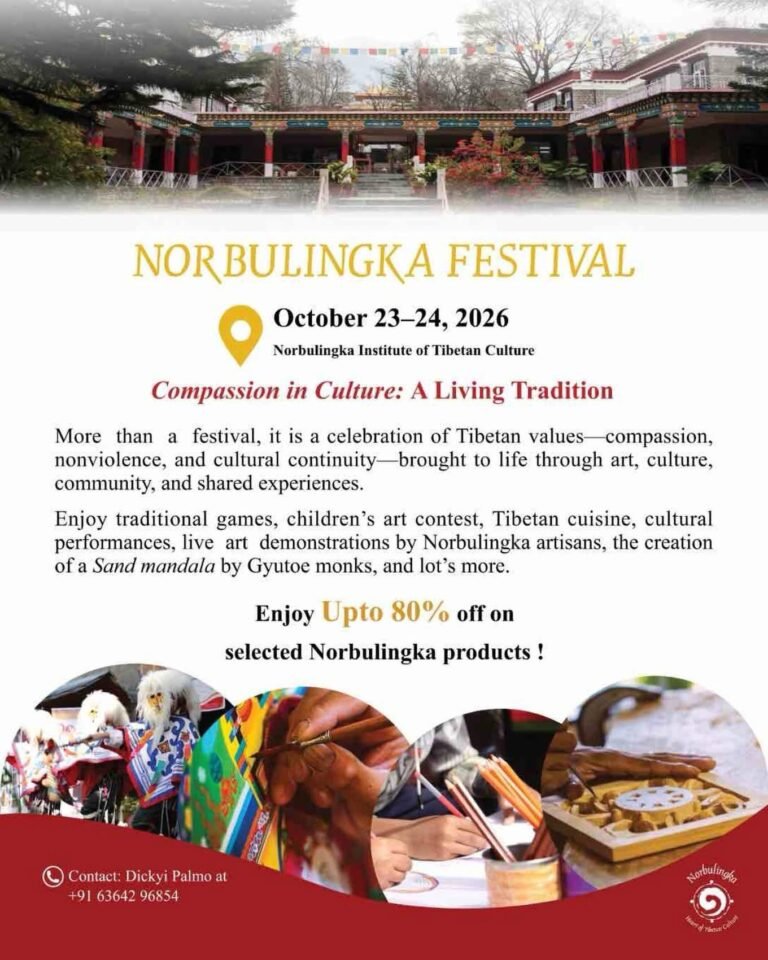
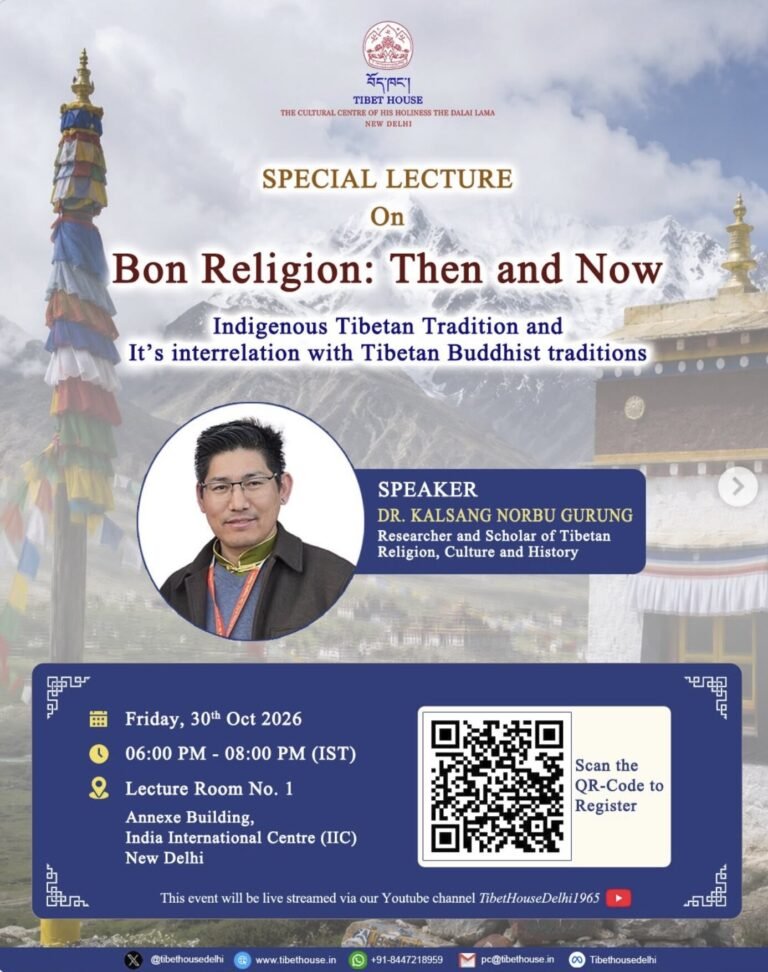


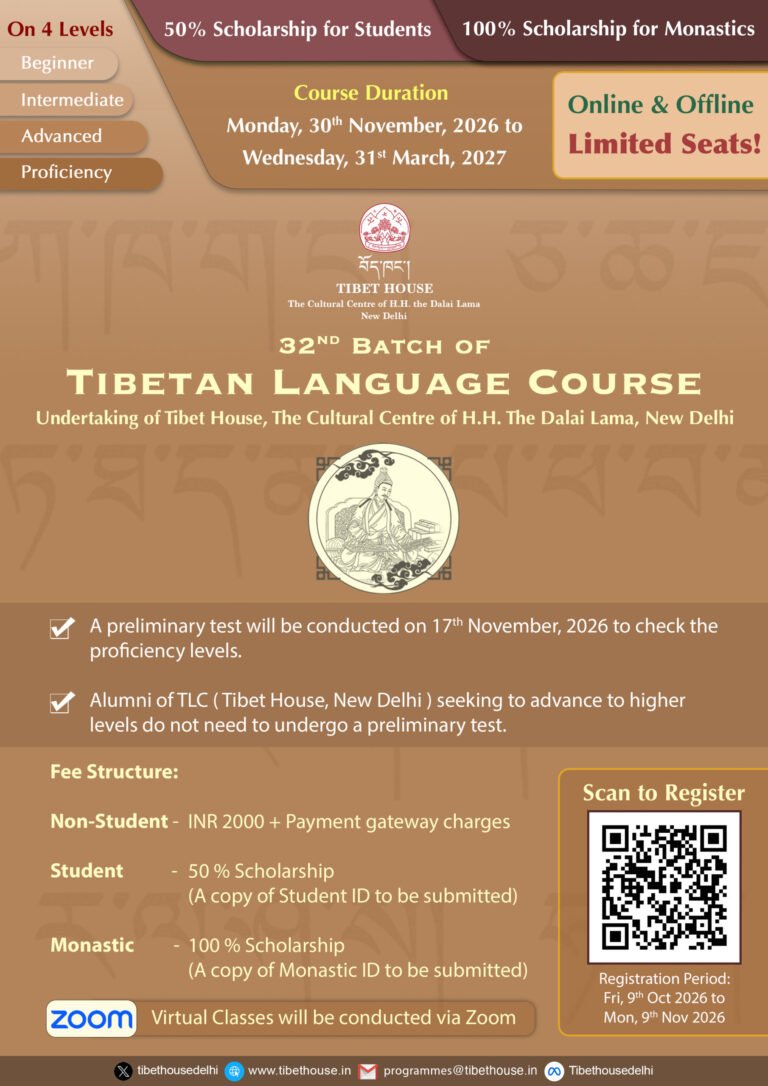
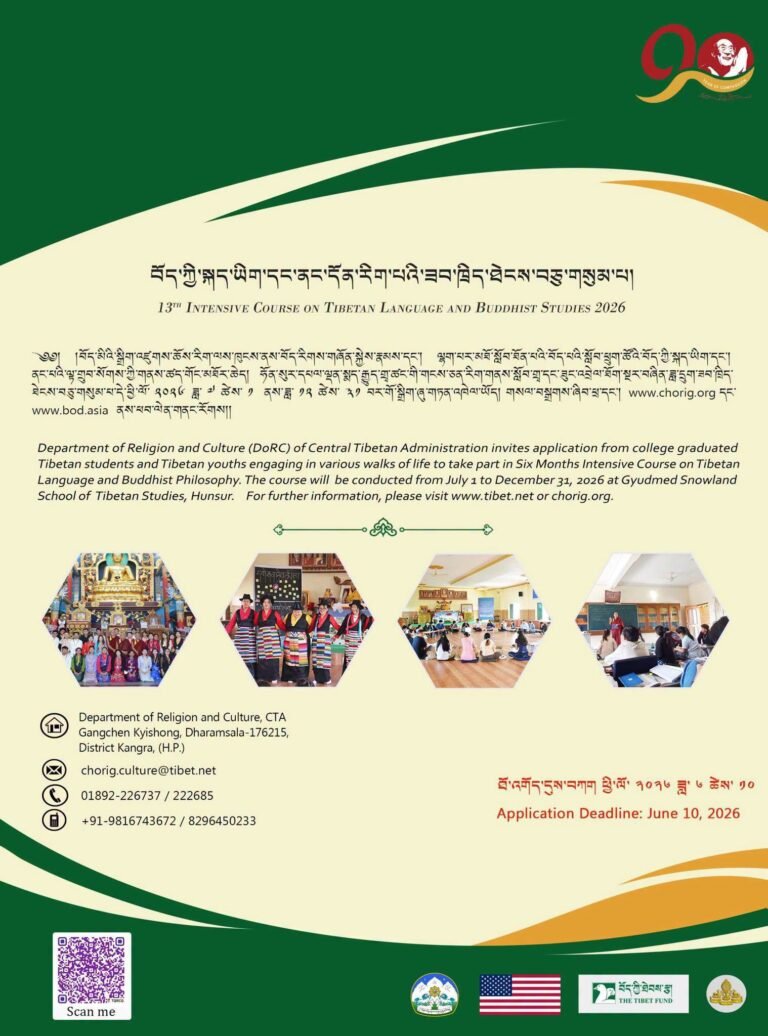



Try another week or town, or show every upcoming event.
Nothing in India yet.
Submit it for free. We review every event before it goes live.
Tibetans in India
Since 1959, India has become the main center of the Tibetan exile community.
Tibetans in India (Home Ministry figure, approx.)
India offers asylum; the exile community begins
Settlements and outside-settlement communities
Tibetan schools in India and Nepal, over 16,500 students
Dharamshala / McLeod Ganj
Where the Dalai Lama and the Central Tibetan Administration are based.
Bylakuppe
Settlements such as Bylakuppe became important cultural and religious centers, with monasteries, schools, health centers, and community organizations.
Tibetan communityLandmark, select to read
The communities behind the events
The Tibetan Community in India
Tibetans began arriving in India in large numbers after 1959, when the 14th Dalai Lama fled Tibet and India offered asylum. Since then, India has become the main center of the Tibetan exile community. The Indian Home Ministry’s Tibetan settlement permit portal states that about 110,000 Tibetans live in India, across 45 settlements and outside-settlement communities. Other reports give lower figures, showing that population counts vary depending on registration, migration, and citizenship status.
The Tibetan community is especially visible in Dharamshala/McLeod Ganj in Himachal Pradesh, where the Dalai Lama and the Central Tibetan Administration are based. Large settlements also exist in Bylakuppe, Mundgod, Hunsur, and Kollegal in Karnataka, as well as in Ladakh, Uttarakhand, Delhi, Odisha, Sikkim, Arunachal Pradesh, and West Bengal.
A major strength of the community is its ability to preserve Tibetan identity while adapting to India. Tibetan schools were created to teach both modern education and Tibetan language, culture, and religion. The CTA’s Education Department says it oversees 64 Tibetan schools in India and Nepal, serving over 16,500 students.
Economically, Tibetans in India work in agriculture, small businesses, restaurants, handicrafts, tourism, monastic institutions, education, and the seasonal sweater trade. Settlements such as Bylakuppe became important cultural and religious centers, with monasteries, schools, health centers, and community organizations.
Tibetans in India still face challenges. Many do not have full Indian citizenship and depend on documents such as Registration Certificates and Identity Certificates. The Tibetan Rehabilitation Policy 2014 aimed to improve access to welfare, land leases, jobs, and economic activity, but implementation can vary by state. Younger Tibetans often feel connected to Tibet, India, and sometimes the West at the same time, creating a complex sense of identity and belonging.
Overall, the Tibetan community in India is one of the world’s best-known exile communities. It has maintained language, Buddhism, political institutions, and cultural traditions for more than six decades, while also becoming part of India’s social and economic life.
Tibetan Events in India Overview
India hosts a growing calendar of Tibetan events from Losar celebrations and Saka Dawa observances to teachings by visiting lamas, Tibetan music concerts, film screenings, and community festivals. Whether you’re new to Tibetan culture or a long-time member of the diaspora, you’ll find Tibetan culture, festivals, concerts, teachings, workshops and community gatherings across India all in one place.
Recently in India
Neighbouring countries
New events arrive in your calendar by themselves.