


A note on sources
This article is intended for public education and awareness. It summarises concerns raised by Tibetan organisations, human rights groups, UN experts, and international reporting. Readers are encouraged to consult the original sources for further information.
On 1 July 2026, a new Chinese law came into force that many Tibetans believe will change the future of their language, their religion and their children. This page explains what the law says, why it has caused such deep alarm among Tibetans living all over the world, and why ordinary people in Switzerland and elsewhere are being asked to pay attention.
Introduction
On 12 March 2026, the National People’s Congress of the People’s Republic of China adopted a new national law with sixty-five articles, formally called the Law on Promoting Ethnic Unity and Progress. It came into force on 1 July 2026. To most people outside China the title sounds harmless, even positive. Unity and progress are words that almost every society uses about itself. Yet for Tibetans, and for Uyghurs, Southern Mongolians and other peoples living under Chinese rule, this law reads very differently.
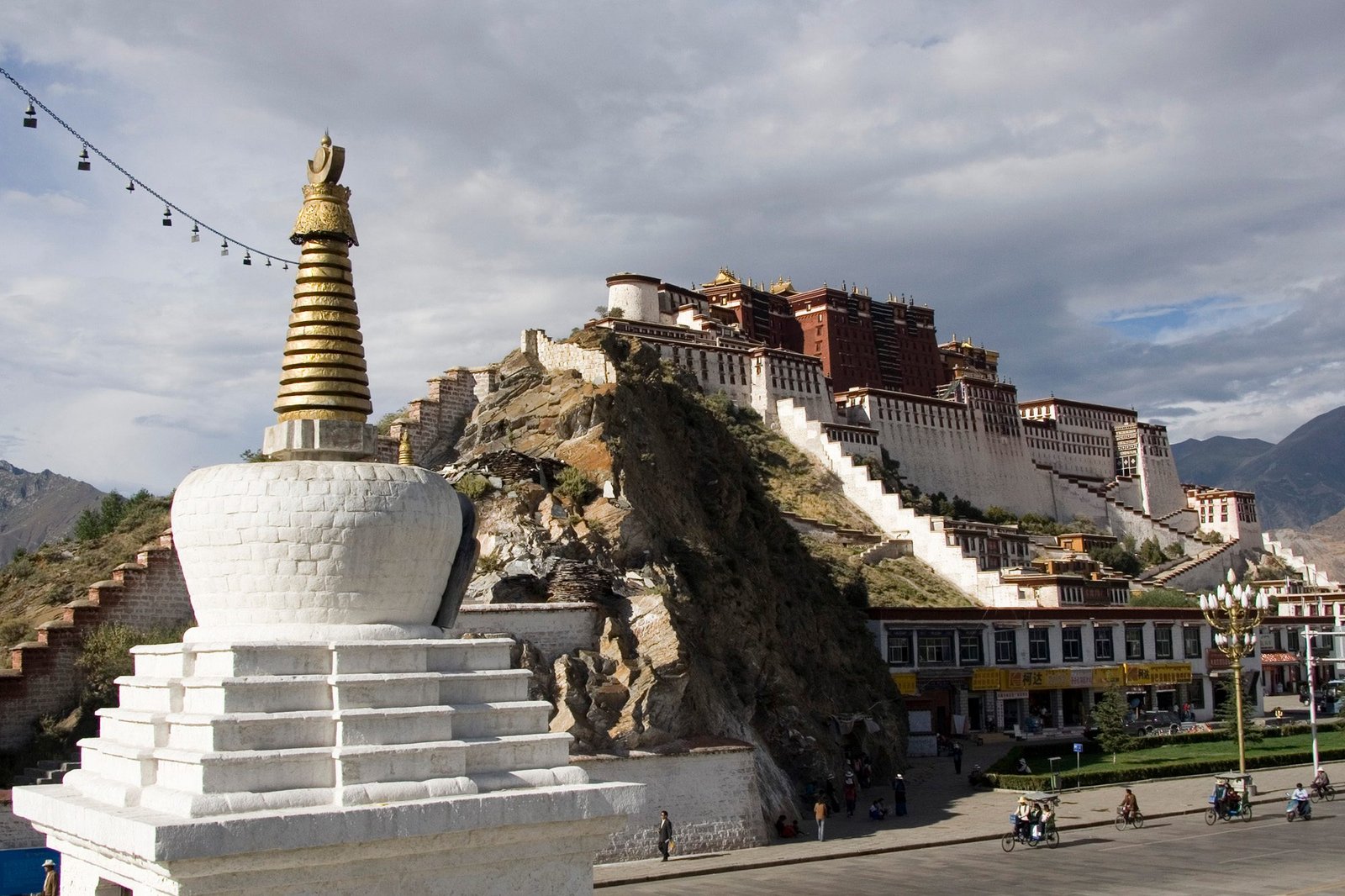
For the first time, policies that had been carried out through administrative directives, local regulations and internal Party campaigns have been written into a single national statute. What was once practice has become law. That change may sound technical, but it matters enormously. It means that the pressure Tibetan families have felt for years in their schools, their monasteries and their villages now carries the full authority of the Chinese legal system behind it, and that resisting it is no longer merely discouraged but potentially unlawful.
This page has been prepared by Tibetan Events Worldwide as a factual introduction for members of the public who may know very little about Tibet. It is written for neighbours, colleagues, students, teachers, journalists and elected representatives in Switzerland and beyond. It is not written against Chinese people. It is written about the policies of the Chinese government, and about what those policies mean for the survival of a distinct people and civilisation.
What China says the law is for
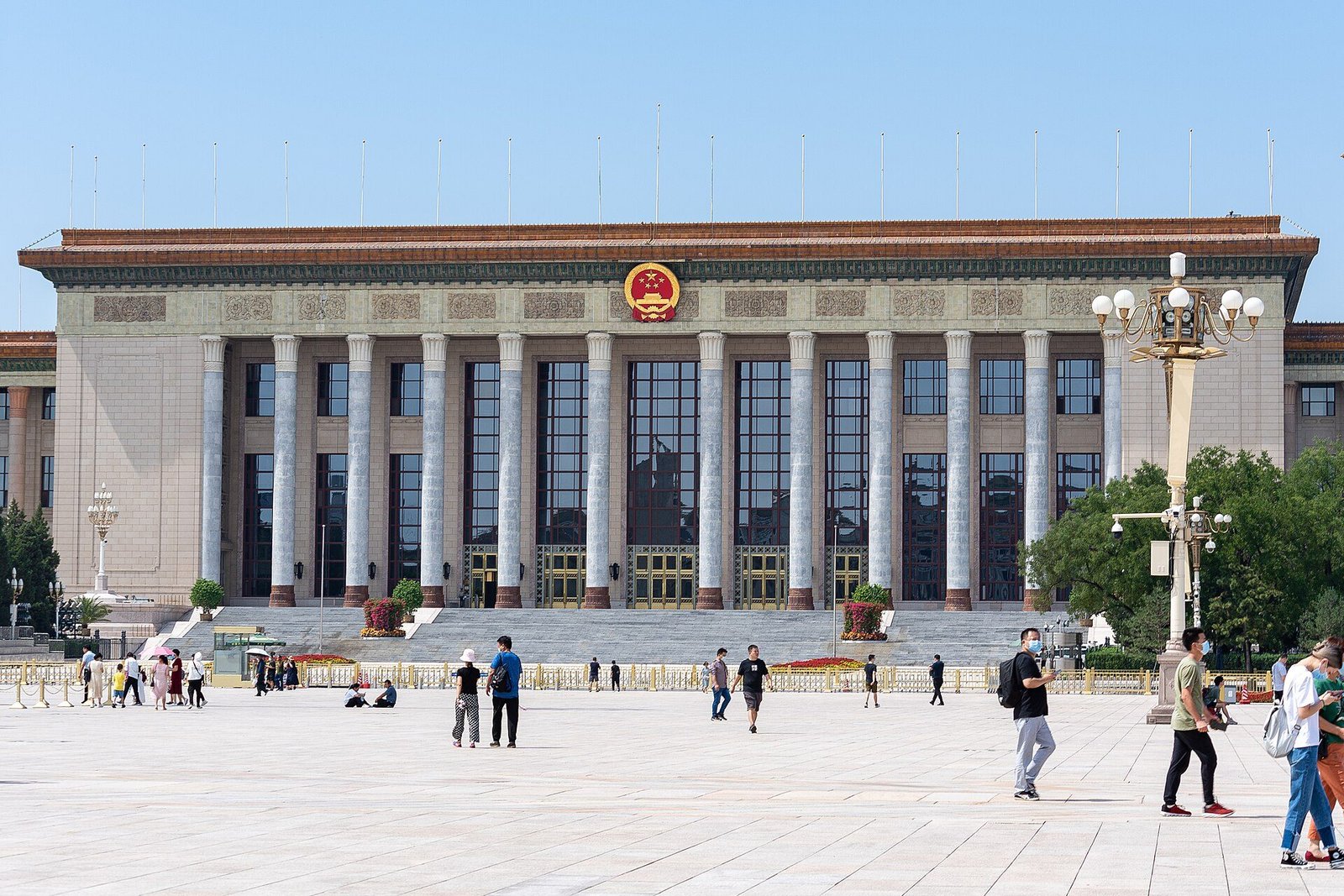
The Chinese government presents the law as a positive instrument of social harmony. In its official framing, the law exists to strengthen solidarity among all of China’s recognised ethnic groups, to reduce inequality between regions, to promote economic development in areas that have historically been poorer, and to guard against separatism and instability. Chinese officials have described the law as a way of safeguarding ethnic harmony, social stability and national security, and have said that its enforcement provisions target unlawful acts that undermine unity or incite separatism rather than ordinary cultural life.
The law also contains language stating that the customs, spoken languages and written scripts of ethnic minorities are respected and protected. Chinese state media has emphasised these passages, presenting the legislation as a modern framework for a multi-ethnic country and pointing to investment, infrastructure and rising incomes in western China as evidence of its good intentions.
It is important to state this position fairly, because a reader who only ever hears one side cannot judge for themselves. The disagreement between Beijing and Tibetans is not about whether the words in the law sound reasonable. It is about what the law requires in practice, and about the experience of the people who have to live under it.
Why Tibetans are concerned
The concern begins with the law’s central concept. Running through the entire text is the requirement to build what the law calls a strong sense of community for the Chinese nation. In Articles 2 and 6, this idea is placed at the foundation of all ethnic policy, under the overall leadership of the Communist Party. Every other provision in the law is subordinate to that goal.
Tibetans do not object to living peacefully alongside their neighbours. What alarms them is that this single national identity is defined in a way that treats Tibetan identity not as something to be preserved within it, but as something to be gradually absorbed into it. Where earlier Chinese law spoke of autonomy and of protecting difference, the new law speaks of consolidating sameness. Equality is redefined: it no longer means the equal protection of distinct peoples, but integration into one dominant national culture.
Tibetans are not asking to be separated from their neighbours. They are asking not to be erased.
This is why organisations such as the International Campaign for Tibet argue that the law reverses commitments the Chinese state itself made in the past. China’s own Constitution, in Articles 4 and 121, guarantees that ethnic minorities have the freedom to use and develop their own spoken and written languages, and that organs of self-government in autonomous areas may use the language of the local nationality. The 1984 Law on Regional Ethnic Autonomy went further still. The new law does not formally repeal these guarantees, but it places a competing and higher priority above them, and in practice that priority wins.
Tibetan language and identity
Article 15 of the law addresses language directly. It requires the state to promote the national standard spoken and written Chinese language, and specifies that when Mandarin is used together with a minority language, Mandarin must take priority in position and order. In plain terms: on the school timetable, on the government form, on the shop sign, on the hospital notice, Chinese comes first and Tibetan comes second, by law.
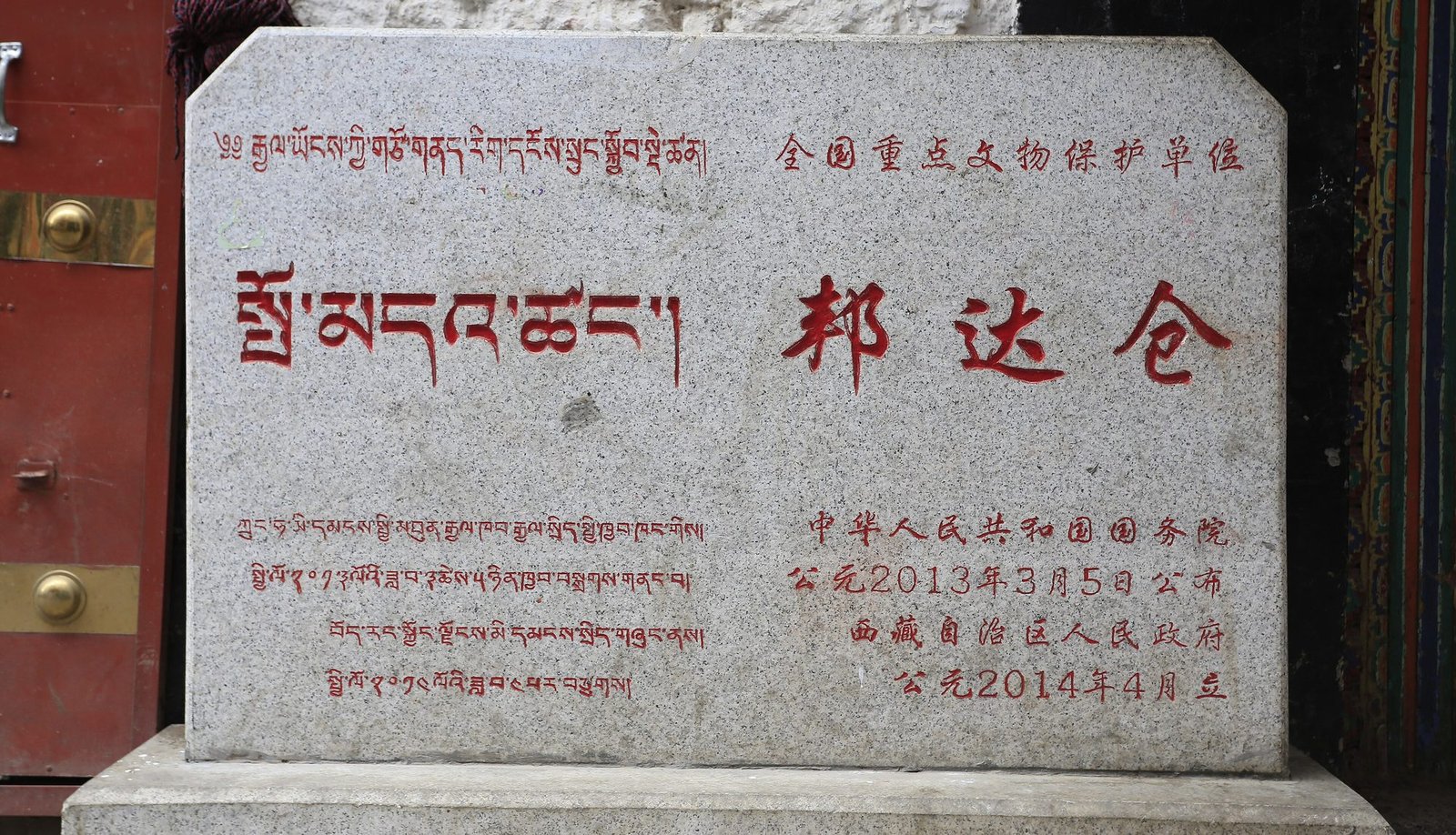
To understand why this wounds Tibetans so deeply, it helps to know what the Tibetan language is. It is not a dialect. It is a written language with a documented history of more than thirteen centuries, with its own script, its own grammatical tradition, and one of the largest bodies of philosophical and religious literature in the world. Entire fields of Buddhist logic, medicine, astronomy and poetry exist in Tibetan and in almost no other language. A child who cannot read Tibetan is cut off not only from their grandparents, but from an inheritance of more than a thousand years.
Language loss does not usually happen through a single dramatic act. It happens quietly, through a thousand small incentives and disincentives: when instruction shifts to Mandarin, when examinations that determine a young person’s future are held only in Mandarin, when the language of employment and administration is Mandarin, and when private Tibetan-language classes organised by monks or volunteers are shut down and their organisers detained. Within two generations, a language that has survived for over a millennium can become something children hear at home but cannot read, write or think in.
When a language stops being the language of the classroom, it slowly stops being the language of the mind.
Boarding schools and children
Nowhere is Tibetan anxiety sharper than around the education of children. On 6 February 2023, three independent United Nations human rights experts, the Special Rapporteur on minority issues, the Special Rapporteur on the right to education and the Special Rapporteur in the field of cultural rights, issued a joint public statement expressing alarm at the large-scale residential schooling of Tibetan children. They estimated that around one million Tibetan children were affected, a proportion far above the national average for boarding education in China.
The experts described a system in which village schools in Tibetan areas were closed and children were moved instead to township or county boarding schools where teaching is conducted mainly in Mandarin. They warned that this appeared to function as a mandatory large-scale programme of assimilation, contrary to international human rights standards, and noted that Tibetan children were losing the ability to communicate easily with their own parents and grandparents in their mother tongue.
The new law does not soften this. Article 20 places a legal obligation on parents themselves to educate their children in loyalty to the Communist Party and to refrain from passing on ideas considered detrimental to national unity. Article 54 encourages citizens to report violations. For a Tibetan mother, this means that teaching her child a prayer, a song, or a version of history she learned from her own mother could become a matter for the authorities, and that a neighbour is invited to report her.
A policy that reaches into the space between a parent and a child has crossed a line that most societies consider sacred.
It should be said clearly that many Tibetan parents want their children to learn Mandarin, and to have every opportunity in modern China. The objection is not to bilingualism. It is to a system in which one language is acquired at the cost of the other, and in which small children spend most of the year away from their families in order to make that exchange.
Religion and Tibetan Buddhism
Article 46 of the law requires religious groups to promote the sense of community for the Chinese nation and to follow the policy known as the Sinicisation of religion, adapting religious activity to socialist society. This continues a direction of policy that Tibetans have experienced for many years: political education campaigns inside monasteries, restrictions on the number of monks and nuns, limits on religious teaching for people under eighteen, surveillance of religious gatherings, and the removal or prohibition of images of His Holiness the Dalai Lama.
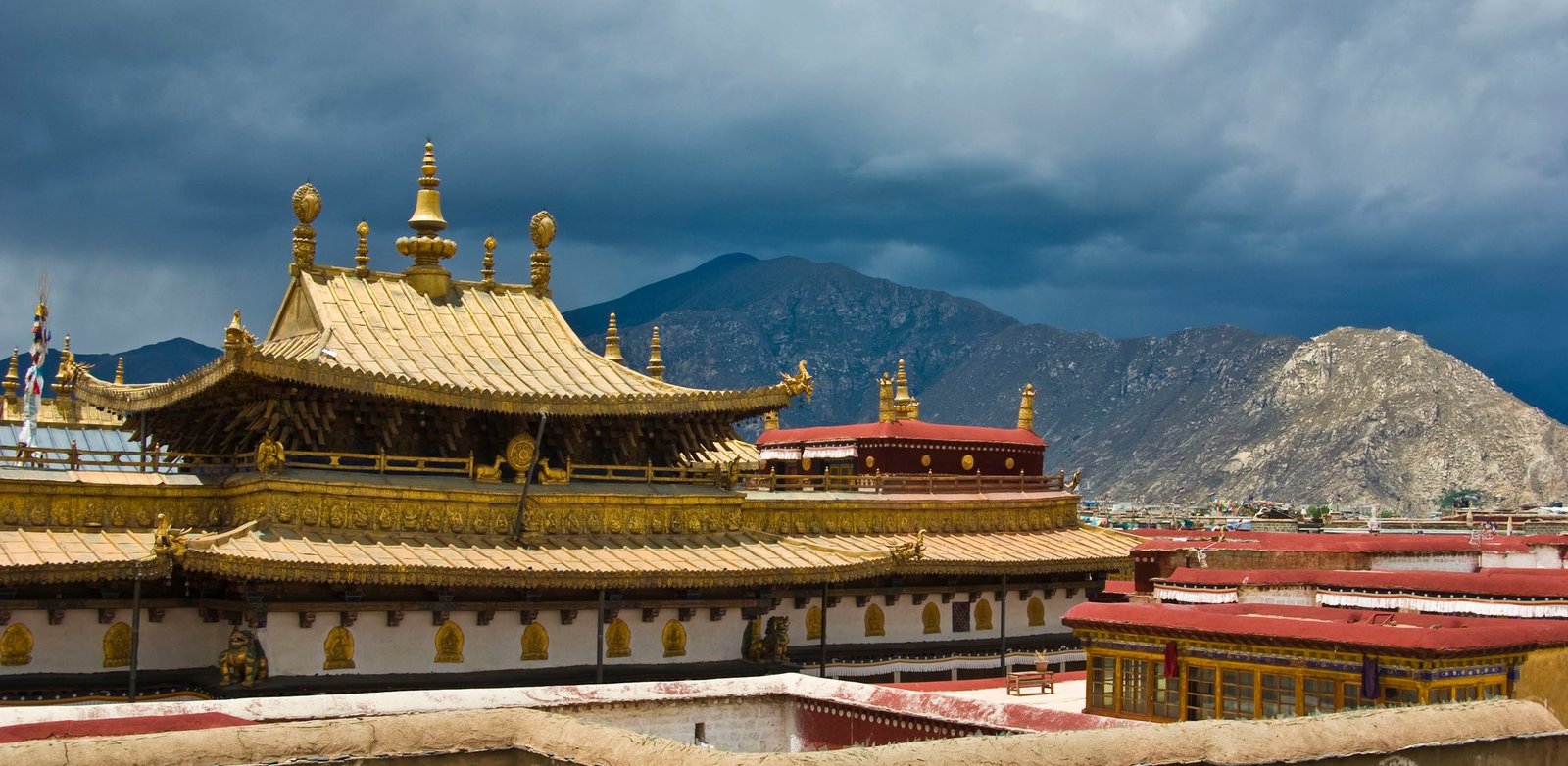
For Tibetans, Buddhism is not a private hobby practised on one day of the week. It is the framework of ethics, learning, art, medicine, architecture and community life. A monastery is a university, an archive, a hospital, a concert hall and a village centre at once. When the state claims the authority to decide what may be taught inside it, and to determine who may be recognised as a reincarnate teacher, it is not regulating a religion. It is taking possession of it.
The question of religious succession is felt with particular intensity, because Tibetans understand that the Chinese state intends to assert control over the recognition of the next Dalai Lama. Whatever one’s own beliefs, it is worth pausing on how strange that claim is: an officially atheist government insisting on the right to identify a reincarnation.
Culture under pressure
Culture is often the last thing outsiders think of when they think about human rights, because it seems less urgent than imprisonment or violence. Tibetans would say it is the ground on which everything else stands. Under the framework the new law reinforces, Tibetan writers, singers, poets and teachers have been detained for work that expressed pride in Tibetan identity or grief at its decline. Traditional festivals and gatherings have been restricted or replaced by state-organised events. Place names, signage and public art have been progressively reshaped.
What is happening is not the banning of Tibetan culture. It is something more subtle and, in some ways, harder to resist. Tibetan culture is permitted to continue as decoration, as costume, dance and photogenic scenery for tourism and state television, while being emptied of the language, religion, history and self-understanding that gave it meaning. A people can be celebrated and disappeared at the same time.
A culture reduced to costume and scenery has not been protected. It has been preserved the way a butterfly is preserved.
Why this also concerns Uyghurs, Southern Mongolians and other peoples
The law is not a Tibet law. It is a national law that applies to all of the peoples the Chinese state classifies as ethnic minorities, and its consequences are already being described in similar terms by Uyghurs from East Turkestan, by Southern Mongolians, by Hui Muslims and by others.
Southern Mongolians experienced a comparable shift in 2020, when the language of instruction in their schools was abruptly changed, provoking widespread protests by parents. Uyghurs have lived through mass detention, family separation and the suppression of religious practice on a scale that has been examined at length by the United Nations human rights office and by independent researchers. When Tibetans read the new law, they recognise a pattern they have watched being applied to their neighbours.
This is why the protests that followed the law’s entry into force were not Tibetan alone. In Washington, Brussels, Taipei and elsewhere, Tibetans stood alongside Uyghurs, Southern Mongolians, Hong Kongers and Chinese democracy advocates. They do not agree about everything. They agree about this.
Transnational repression and fear beyond China’s borders
One provision of the law has drawn particular attention outside China. Article 63 extends the law’s reach to organisations and individuals outside the People’s Republic of China whose actions are judged by Chinese authorities to undermine ethnic unity or promote ethnic division. In other words, a law about internal ethnic policy claims jurisdiction over people who are not in China at all.
For a Tibetan family in Zurich, Bern, Rikon or Winterthur, this is not an abstraction. Many Tibetans in Switzerland still have parents, siblings and cousins inside Tibet. They already weigh every phone call, every photograph, every public appearance against the possibility that a relative at home will be questioned. A law that formally announces extraterritorial consequences deepens a fear that was already present, and it does so precisely among the people best placed to tell the world what is happening.
The United Nations High Commissioner for Human Rights has publicly warned that the law risks conflicting with China’s obligations under international treaties and may deepen restrictions on the rights of ethnic minorities. China has ratified the International Convention on the Elimination of All Forms of Racial Discrimination, the Convention on the Rights of the Child and the International Covenant on Economic, Social and Cultural Rights. Each of these contains protections that the new law appears difficult to reconcile with.
Development in Tibet: who benefits?

Visitors to Tibetan areas often see new roads, railways, airports and apartment blocks, and reasonably conclude that life must be improving. Development is real, and it would be dishonest to pretend otherwise. The harder question is who decides what is built, who benefits from it, and what is lost.
Tibet sits on the headwaters of the great rivers of Asia and holds substantial reserves of lithium, copper and other minerals. Large hydropower and mining projects have advanced across the plateau, including the enormous hydropower scheme approved for the Yarlung Tsangpo, the river that becomes the Brahmaputra. These projects have displaced communities, submerged monasteries and villages, and provoked protests by residents who were given little say. Electricity and raw materials frequently travel east to industrial centres, while the people living beside the dam carry the environmental risk in a seismically active region.
Alongside this, nomadic families who managed the grasslands for centuries have been relocated into settlements under policies described as ecological protection and poverty alleviation. Many have lost their herds, their skills and their independence, and now depend on subsidies in towns where employment often requires fluent Mandarin.
Development that a people cannot refuse, shape or leave is not development they own.
Who was Pawo Lobga Rangzen?
On 2 July 2026, one day after the law came into force, a Tibetan man set himself on fire outside the headquarters of the United Nations in New York. He died of his injuries at Bellevue Hospital. His name was Lobga Rangzen, and Tibetans refer to him with the honorific Pawo, which means hero or brave one. He was fifty-two years old.
He was born Lobsang Palden in eastern Tibet. In the 1990s he escaped into exile in India, where he became a monk at a monastery in South India. In 2006 he moved to the United States and settled in Jackson Heights, Queens, in New York, one of the largest Tibetan neighbourhoods outside Asia. He worked in construction, delivered food and drove for a ride-hailing company. He was, by every account, an ordinary working man.
He was also a lifelong activist. He served with the Regional Tibetan Youth Congress of New York and New Jersey and became president of the Tibetan National Congress in 2023. He joined Walk for Tibet marches, helped organise a peace rally convoy across North America, and appeared again and again at demonstrations outside the Chinese consulate and the United Nations. Friends remembered, with affection, that he had left one job after another rather than miss a protest. He also co-founded a group that met twice a week to dance traditional Tibetan circle dances, because he believed that culture had to be lived and not only defended. Those who knew him described him as friendly, compassionate and consistently kind, and said that almost every conversation with him found its way back to Tibet.
In the days before his death he posted a video speaking about the situation in Tibet and about the importance of preserving the Tibetan language and culture. A friend later recalled that shortly beforehand Lobga Rangzen had said to him that he believed China would never listen to Tibetans. His was the first known self-immolation by a Tibetan on United States soil.
Why his sacrifice moved Tibetans around the world
It is important to write about this carefully and without any suggestion that such an act should be repeated or admired as a model. Self-immolation is a tragedy. Tibetan leaders, including His Holiness the Dalai Lama, have consistently discouraged it, and the Central Tibetan Administration has urged Tibetans to stay alive and to keep working.
What can be said honestly is why so many Tibetans were moved. Lobga Rangzen was not a distant figure in a place they had never seen. He was a member of a diaspora community much like the Tibetan community, a man who had fled as a young person, worked ordinary jobs, raised his voice for thirty years through every peaceful channel available, and concluded that no one was listening. His choice was understood by many Tibetans not as an act of despair alone, but as a desperate political protest and a call for the world to pay attention, made at the door of the institution that exists to protect people like him.
Memorial prayers were held in Dharamsala, across the United States, in Australia, in Taiwan and in Europe. The Central Tibetan Administration described his act as an offering of the body for the Tibetan cause. In Taipei, supporters gathered in the street in early August.
He believed the world had stopped listening. The most meaningful response is to prove him wrong.
Why the law sparked global protests
On 1 July 2026, the day the law took effect, Tibetans and their allies demonstrated in cities across the world. There were protests outside the Chinese Embassy in Washington, D.C., organised by the Capital Area Tibetan Association, and demonstrations at the European Parliament in Brussels. In Dharamshala, the seat of the Tibetan exile community in India, four Tibetan non-governmental organisations, including the Tibetan Women’s Association, Students for a Free Tibet and the Tibetan Youth Congress, held a joint protest. Further demonstrations took place in towns and cities across the United States and Europe.
They ask China to keep promises China has already made.
The demands were consistent: that the law be repealed, that China honour the guarantees in its own constitution and in the treaties it has ratified, that United Nations human rights mechanisms be given genuine and unsupervised access to Tibet, and that governments raise the law directly with Beijing rather than treating it as an internal administrative matter.
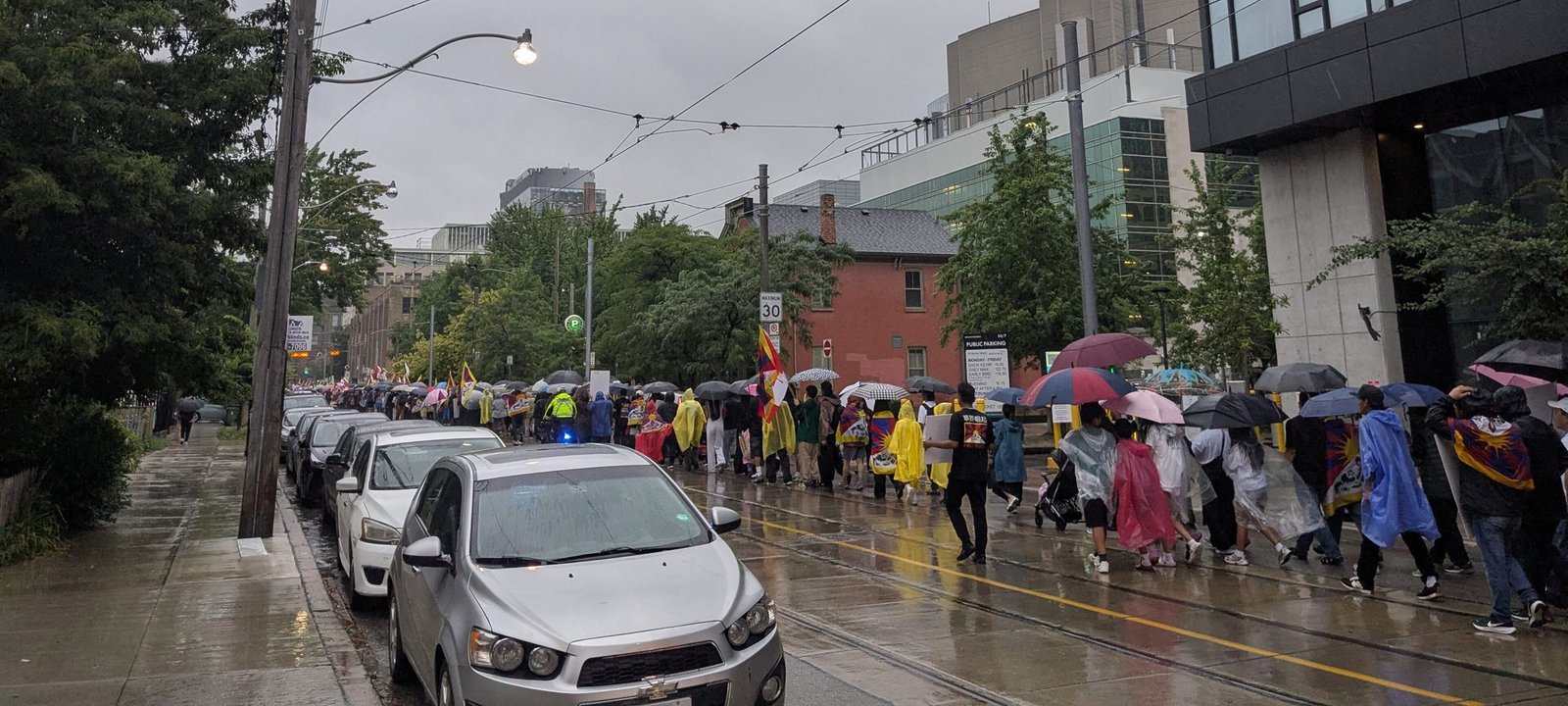
Tibetan campaigners point out that these are not radical demands. They ask China to keep promises China has already made.
What every person should understand
If you take only a few things from this page, let them be these. The concern is about government policy, not about Chinese people, and Tibetans outside Tibet live and work alongside Chinese neighbours and colleagues without hostility. The issue is not primarily about borders or flags; it is about whether a child born in Lhasa or Amdo will be able to read the language of her grandmother, practise the religion of her family, and describe her own history in her own words.
Understand also that this is happening now, not in the past. It is documented not only by Tibetan organisations, which naturally have a position, but by independent United Nations experts, by the United Nations human rights office, and by international news organisations working under difficult conditions. Tibet remains one of the most restricted places on earth for journalists and diplomats, which means that the picture available to the world is almost certainly incomplete rather than exaggerated.
And understand that Tibetans are not asking for pity. They are asking to be heard, and for the ordinary mechanisms of international accountability to be applied to them as they would be to anyone else.
What the international community can do
Governments can raise the Ethnic Unity and Progress Law directly and by name in bilateral discussions with China and in multilateral bodies, rather than relying on general statements about human rights. Parliaments can debate it, and parliamentarians can ask their foreign ministries what assessment they have made of Article 63 and its implications for their own citizens and residents of Tibetan origin.
States can press for genuine, unrestricted access to Tibet for United Nations Special Procedures and for the Office of the High Commissioner for Human Rights, and can support the renewal and strengthening of independent monitoring. They can also examine transnational repression on their own territory, so that Tibetans in Switzerland and elsewhere can speak freely without fearing for relatives at home.
Join in person





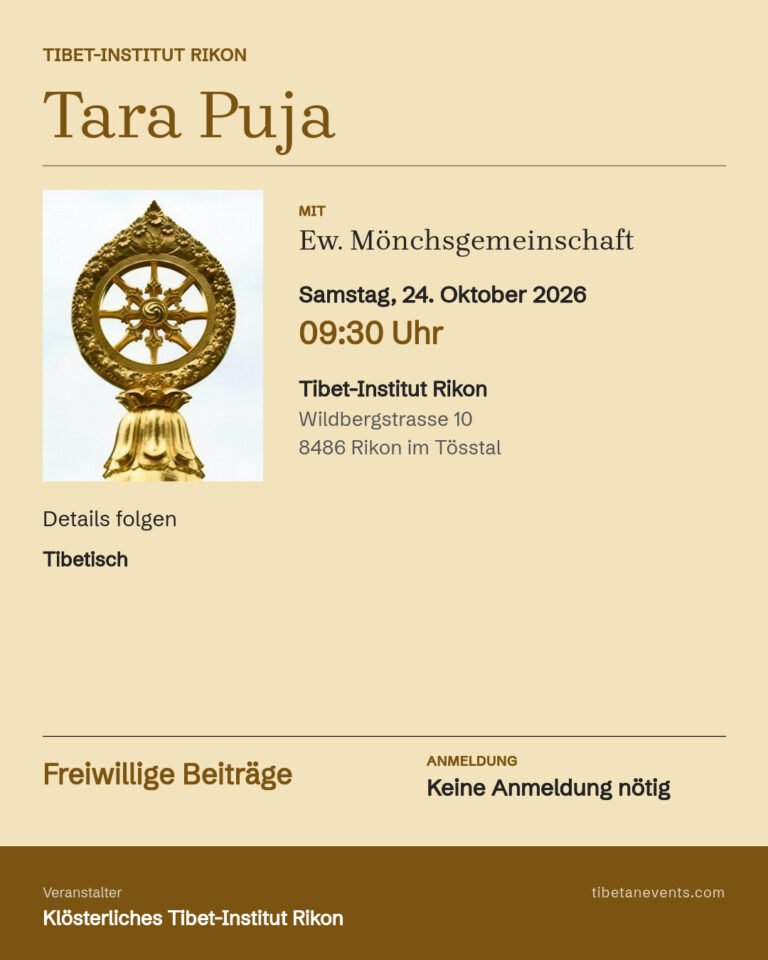



Individuals can do more than they imagine. They can learn the basic facts and correct misinformation calmly when they encounter it. They can attend a Tibetan cultural event, support Tibetan language schools in the diaspora, follow the work of established human rights organisations, write to their own elected representatives, and share carefully sourced information rather than inflammatory content. Sustained, factual, non-hostile attention is what Tibetan organisations consistently ask for.
Join in person
Conclusion
China’s Law on Promoting Ethnic Unity and Progress did not invent the policies Tibetans have lived under. What it did was gather them, formalise them and give them the permanence of national law, while extending their reach beyond China’s borders. That is why Tibetans describe 1 July 2026 as a turning point rather than another difficult day.
A language of thirteen centuries, a religious and philosophical tradition of extraordinary depth, and a people’s ability to raise their own children in their own culture are not abstractions. They are the ordinary inheritance that every community assumes it will be able to pass on. Tibetans are asking the world to notice, before that inheritance becomes something that can only be visited in a museum.
Lobga Rangzen believed the world had stopped listening. Reading this page to the end is a small act, but it is the opposite of not listening.
Sources and further reading
A note on sources. This article is intended for public education and awareness. It summarises concerns raised by Tibetan organisations, human rights groups, UN experts, and international reporting. Readers are encouraged to consult the original sources for further information.
- [1]UN Office of the High Commissioner for Human RightsChina: UN experts alarmed by separation of 1 million Tibetan children from families and forced assimilation at residential schools (6 February 2023)ohchr.org ↗
- [2]International Campaign for TibetNew PRC Ethnic Unity and Progress Law enforces assimilation of Tibetans, contradicts national and international lawsavetibet.org ↗
- [3]Radio Free AsiaExplained: China’s ‘ethnic unity and progress promotion’ law (24 July 2026)rfa.org ↗
- [4]Radio Free AsiaTibetan activist dies after setting himself on fire outside UN headquarters (3 July 2026)rfa.org ↗
- [5]DocumentedLobga Rangzen dedicated his life to Tibet. His final protest made history. (29 July 2026)documentedny.com ↗
- [6]International Campaign for TibetICT joins Tibetans in protests urging global action against China’s new ethnic unity lawsavetibet.org ↗
- [7]International Tibet NetworkReject China’s “Ethnic Unity Law”: Protect Tibetan Language and Identityactions.tibetnetwork.org ↗
- [8]International Tibet NetworkUN human rights experts on Tibetan residential schoolstibetnetwork.org ↗
- [9]Hong Kong Free PressChina’s new ethnic unity law legalising cultural ‘erasure’, Tibetan and Uyghur minorities warn at UN (1 July 2026)hongkongfp.com ↗
- [10]The DiplomatXi Jinping’s ‘forging’ of ‘ethnic unity and progress’ (July 2026)thediplomat.com ↗